


The mine is located about 800 m from Straßberg in the Glasebach valley.
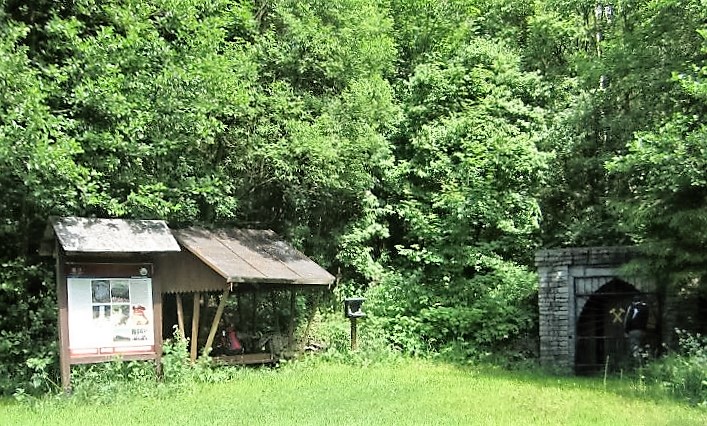
The Strassberg Mining Museum contains two areas that are divided over time. The first is the surface mine, which depicts modern mining from the post-war period up to 1992.
The second is the Glasebach underground mine, which illustrates historical mining from the 18th century.
The Glasebachschacht was built on the Straßberg – Neudorfer Gangzug. This starts about 3.5 km west of Straßberg and extends over a distance of 15 km to Königerode. The average dip to the north is 45 – 60 degrees. The main mineralization consists of fluorite – quartz – calcite.
The visitor tour begins in the above-ground wheel room with the reconstructed artificial wheel (diameter 9.5 meters), 21 meters below the headframe and leads over the tunnel floor. The first and second levels can be accessed via a staircase built into the main shaft. Of particular importance are the still existing original parts of the „Straßberger Schwingkunst“ (water lifting technology), the oak panelling of the galleries, the evidence of old mining technology, artistic dry stone walls and the rich and colourful mineralization of the mine. The tour lasts approx. 80 minutes and covers a depth of 40 meters.
The stamp site is located at the old Glasebach gallery, not far from the historic lime kiln. This kiln was built right next to a limestone quarry. The limestone was placed in the kiln in the form of a vault that completely filled the kiln. The kiln was often covered with clay at the end. A wood fire was set from below, which was maintained until all the limestone had been burnt through. The lime burnt here was used for smelting the iron ore extracted from the mines, for the farmers« own needs and for domestic use. During the restoration work, a brick lining was also found at the mouth of a water solution tunnel in the region. The lime kiln ceased to operate around 100 years ago.
The show mine is very well signposted in Straßberg. From the parking lot, you pass the Radstube to the stamping station at the „Alter Glasebacher Stollen“
