


Regenstein Castle and Fortress (293 m above sea level) was built on a sandstone rock north of Blankenburg and is a striking feature in the landscape of the Vorharz.
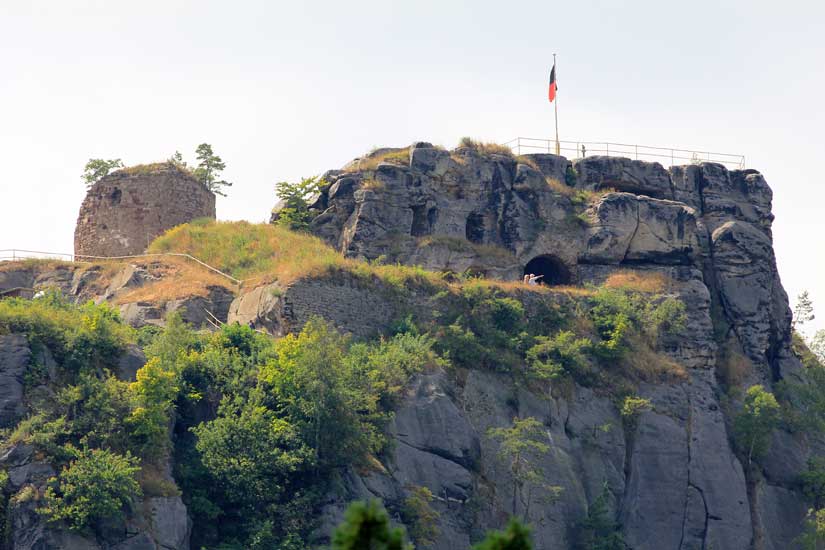
The castle became famous above all through Count Albrecht II von Regenstein (1310–1349), who frequently had disputes with the rulers of the surrounding towns, the Bishop of Halberstadt and the Abbess of Quedlinburg in the 1330s. These stories were romanticized in the novel „The Robber Count“ by Julius Wolff. In the 15th century, the Regenstein family of counts moved to Blankenburg Castle. The castle fell into disrepair and became a ruin.
The medieval castle complex was expanded into a fortress by Prussia from 1671. In 1736, lightning struck the powder tower and severely damaged the fortress. In 1757, the French conquered the Regenstein. The Prussians recaptured it just five months later on February 12, 1758 and rendered the facility unusable. The gunpowder store, which was located relatively high up, was blown up in the process. All that remains of the fortress are the casemates, the rockwork and the restored entrance gate. Characteristic are the many cave-like rooms carved into the rock, which today house an exhibition of archaeological finds from the castle area. Even the horse stables were carved into the rock.
Johann Wolfgang von Goethe visited the Regenstein together with the painter Georg Melchior Kraus on September 11, 1784 on his third trip to the Harz Mountains to conduct geological studies. Two drawings and a rock sample in Goethe’s rock collection commemorate this visit.
The Regenstein is one of the most interesting castles in the Harz Mountains. Conquering the sandstone rock is an impressive experience. In addition to breathtaking panoramic views, even the youngest visitors will marvel at the structure carved into the rock.
The starting point for a visit is the signposted parking lot below the castle, which is easily accessible from the A36. It is a good idea to first walk along the narrow, signposted path to the left of the parking lot to the
