


Falkenstein Castle, one of the oldest and best-preserved medieval castles in the Harz, is located on a mountain spur above the Selke valley.
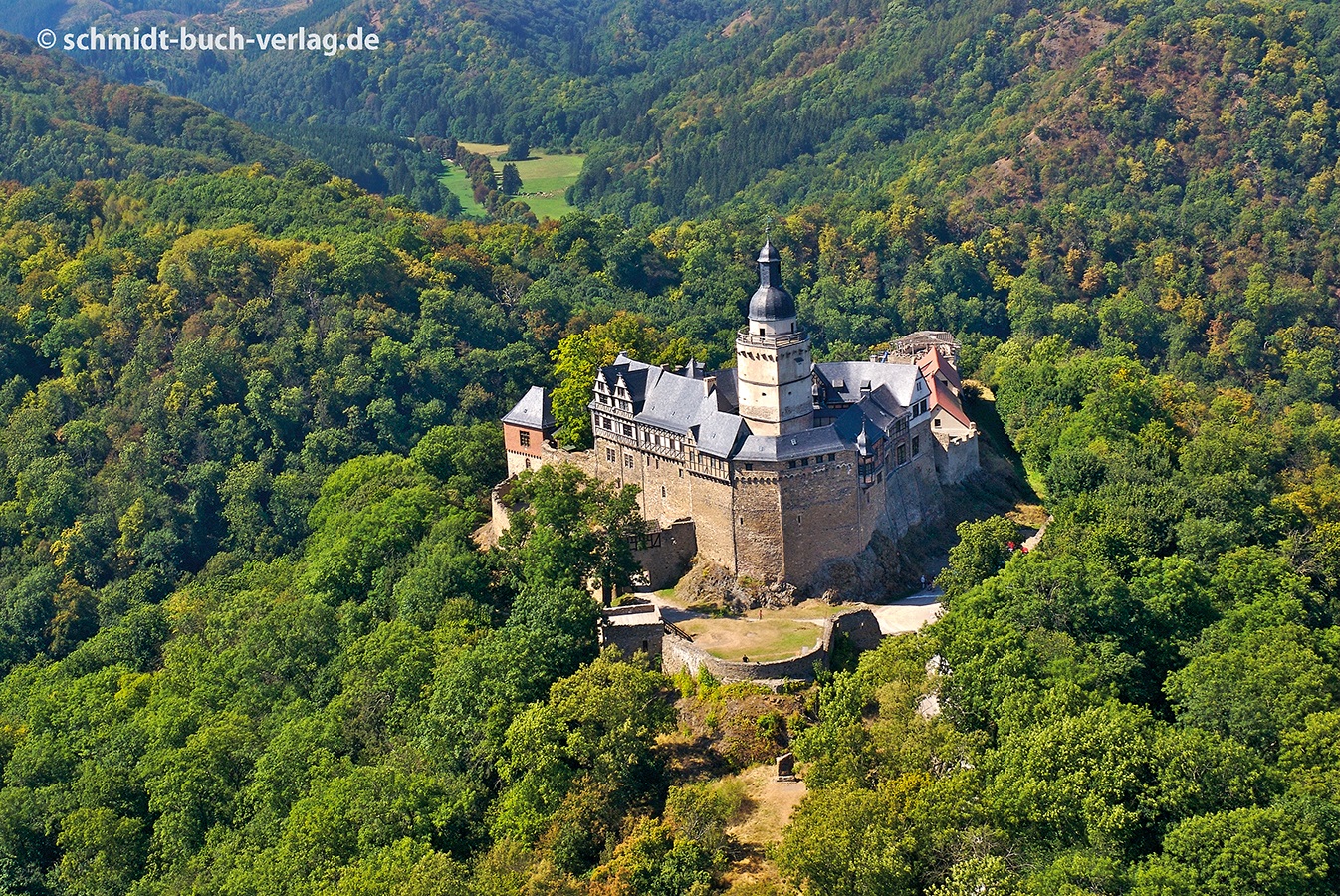
The ancestors of the Falkensteins are considered to be the noblemen of Konradsburg HWN 20, who had the castle built in the 12th century. In the middle of the 13th century, Count Hoyer II von Falkenstein extended the castle complex by adding the palas, the kennels and other fortifications.
However, the count became less famous as a builder than as a patron of the legal expert Eike von Repgow. According to legend, he completed the „Sachsenspiegel“, the most important German-language law book of the Middle Ages, on the Falkenstein.
In 1323, Burchard V took over the Falkenstein inheritance. However, as his marriage remained childless, he decided to take a momentous step and transferred Falkenstein and all its accessories to the Bishopric of Halberstadt in 1332.
On his death in 1334, the male line of the Counts of Falkenstein became extinct.
After around one hundred years of episcopal rule, the lords of Asseburg Castle took over the complex in 1437. Their intensive building activity in the 15th to 17th centuries still characterizes the image of the Falkenstein today, but retains its basic medieval character.
Parts of the Falkenstein were already open to visitors in the 19th century. In the spirit of Romanticism, the castle now attracted numerous hikers who discovered the Falkenstein as an ideal knight’s castle and were inspired by it.
At the end of the Second World War, the von der Asseburg family fled from the advancing Red Army troops to the western territories of Germany. As a result of the war, they were expropriated in East Germany as part of the „land reform“. The Falkenstein passed into state ownership.
As early as April 1, 1946, Kastellan Henne reopened the castle to tourists – now as Museum Burg Falkenstein. Today’s Saxony-Anhalt Cultural Foundation took over the property in 1996 and the operation of the museum in 1998.
The best starting point for a hike to Falkenstein Castle is the official „Gartenhaus“ parking lot on the country road between Meisdorf and Pansfelde. From there, follow the signposted paths to the castle.
