

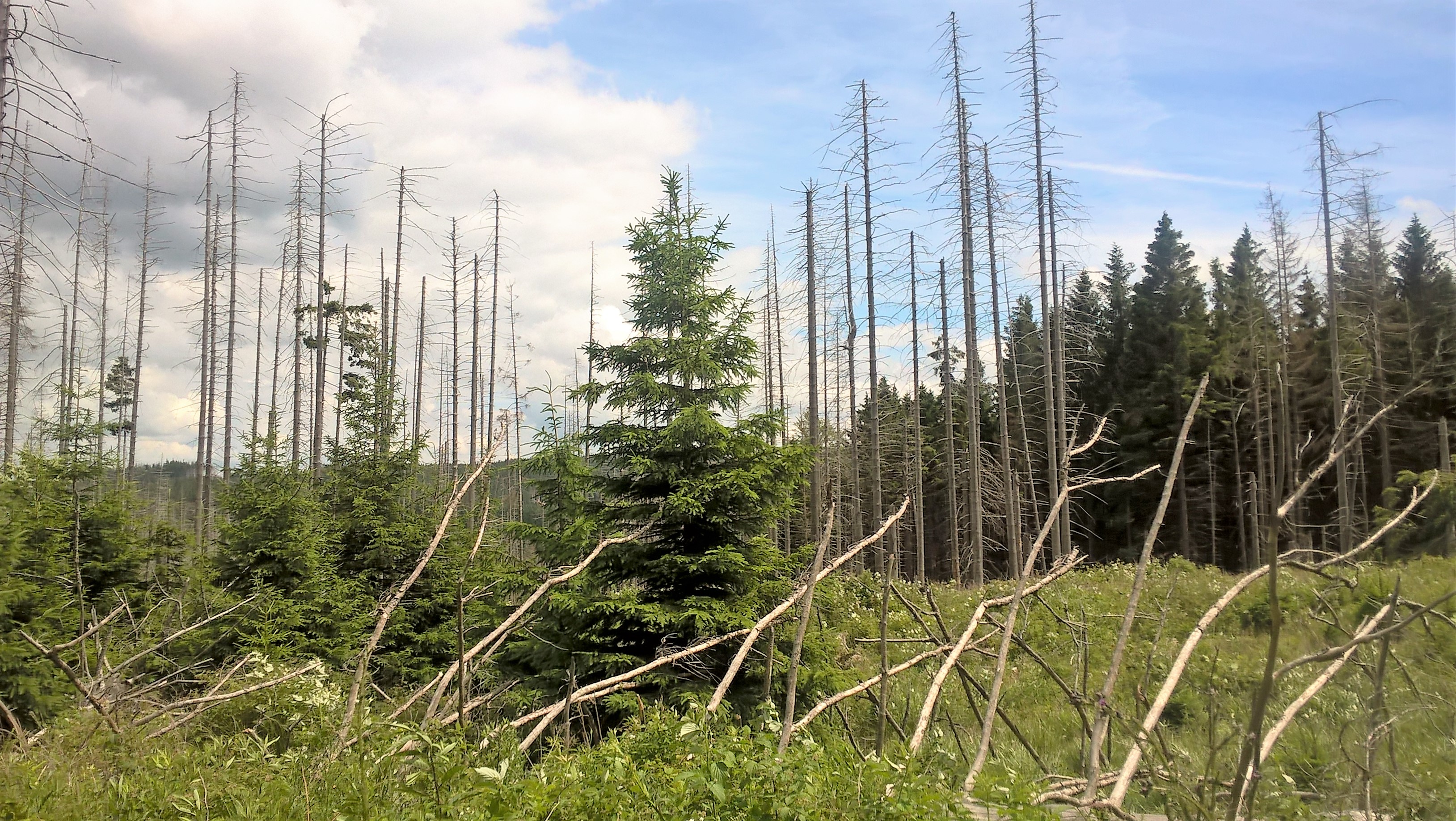
The Stempelsbuche crossroads (671 m above sea level) is located on the Heinrich Heine Trail, which leads from Ilsenburg to the Brocken.
The stamping station is also located in the refuge here. It probably got its name from the once magnificent beech tree, which now only exists as a stump.
From Stempelsbuche you can continue the tourto Brockenhaus HWN 9, Gelber Brink HWN 22, Ferdinandsstein HWN 16 or the Scharfenstein ranger station HWN 2.
Between Bremer Klippe and Stempelsbuche HWN 8, you hike through dead spruce forests. This may frighten hikers, but the national park has the following strategy for dealing with this problem:
Quote Harz National Park:
Targeted interventions to create the wilderness of tomorrow
Forests are on the move. If people do not intervene, they follow their own forest laws. But because humans have overused the forest in past centuries, we must help the cultivated forest to become a natural forest again. In the national park, we simply leave the forest to its own devices in areas that are already close to nature and trust in its powers (natural dyamic zone). In other areas, we give it a helping hand, keep the bark beetle at bay or promote the cycle of life of growth and decay (nature development zone).
Natural dynamic zone
Forest in the natural dynamic zone is left to its own devices. There is no more human intervention here. The only exceptions are bark beetle control in a 500-metre-wide strip on the outer borders of the national park and traffic safety along important paths.
Nature development zone
In the nature development zones, the national park is still carrying out measures to increase the closeness to nature in these areas. This improves structural diversity and ecological stability and promotes deciduous trees. No economic goals are being pursued. However, the wood produced in the forest can be used.
Bark beetle control
Bark beetle control is carried out according to the following principles:
- Control on the outer border to protect endangered neighboring populations (in a strip approx. 500 m wide)
- Protection of large spruce complexes in the nature development zone
- No measures in the natural dynamic zone (with the exception of bark beetles in the border area)
Our aim is for at least 75% of the national park area to be left to its own devices by 2022, i.e. to be classified as a natural dynamic zone.
