

At 1,141 m above sea level, the Brocken is the highest peak in the Harz Mountains and is located in the district of Schierke in the core zone of the Harz National Park.
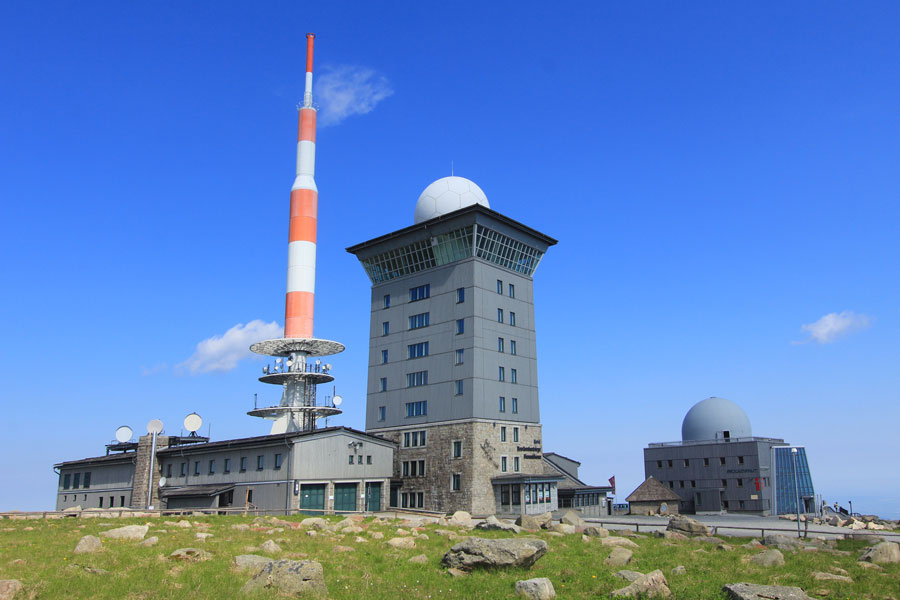
Geographically, it lies on the former inner-German border and was a restricted area from 1961 to 1989. Climatically, its elevated position in the north of Germany makes for harsh winds and cold temperatures, comparable to the mountains of Iceland.
In the Brockenhaus you will find an exciting exhibition on the history and nature of this fascinating mountain.
The history of the Brockengarten is just as interesting as its plants are extraordinary. The botanical garden on the forest-free summit of the Brocken has been in existence since 1890 and is now home to around 1500 plant species from all of the world’s high mountain ranges. It protects and preserves endangered and very rare plants and at the same time shows its guests from all over the world what grows and blooms at the very top.
Plants of the far north grow amidst granite boulders on the Brocken hilltop. A circular hiking trail (1.6 km) leads around the hilltop – along where the Brocken Wall once stood. Take your time for the Brocken circular trail with the Devil’s Pulpit and the Witches« Altar. These two granite cliffs on the Brocken summit already impressed Goethe. This is where the witches and devils meet on Walpurgis Night.
Since July 1992, passengers on the Brocken Railway have once again been able to climb the highest peak in northern Germany with steam-powered vehicles with around 700 hp. The steepest section of the route to the Brocken is covered in around 50 minutes from Drei-Annen-Hohne station.
Hiking trails on the Brocken
Hike in the footsteps of Heinrich Heine from Ilsenburg to the Brocken.
This ascent to the Brocken begins in Ilsenburg and follows in the footsteps of Heinrich Heine along the Ilse mountain stream. Winding forest paths take you through the deeply incised Ilse valley past the Ilsestein to the impressive Ilse Falls. Ancient beech forests and rugged rock formations line the path. The Heine memorial commemorates the poet’s ascent of the Brocken in 1824. The trail soon turns west and meets the Harz Border Trail at the Hermannsklippe. This leads along the former Kolonnenweg – past the Bismarckklippe and the Kleiner Brocken (1,019 m) – steeply up to the forest-free Brocken summit. This section of the trail offers a magnificent view of the Eckertalsperre reservoir and the northern edge of the Harz Mountains.
The shortest ascent to the Brocken, suitable for experienced hikers
For experienced and well-equipped hikers, we recommend the charming ascent from Schierke through the Eckerloch to the Brocken. The rustic hiking trail begins a few meters behind the National Park House at the waterworks. With good footwear, this route over roots, rocky granite and boardwalks is a real pleasure. It leads through enchanting spruce forest along the rapids of the Schwarzer Schluftwasser to the Eckerloch wetland. The Eckerlochstieg joins the Brockenstraße, which then leads hikers to the summit.
From Torfhaus via the Goethe Trail to the Brocken
Goethe once set off for the Brocken from the west, from Torfhaus. There is already a wonderful view of the Brocken from the B4. The Goethe Trail follows the Abbegraben. Goethe was not yet familiar with this watercourse – it was built in 1827 and is now part of the new Upper Harz Water Management World Heritage Site. A wooden footbridge leads through the large peat bog. Peat used to be mined here, but today the valuable moors of the Harz are strictly protected. The path leads along the foot of the Quitschenberg to the Eckersprung. Now the hiker crosses the former inner-German border. The Goethe Trail runs alongside the Brocken Railway at the Goethe Moor. The forest thins out and heathland becomes increasingly visible. The hiker has to complete the last section on the Brocken road. The Goethe Trail is part of the Harz Witches« Trail.
The stamp box is located at the entrance to the Brockenhaus!
